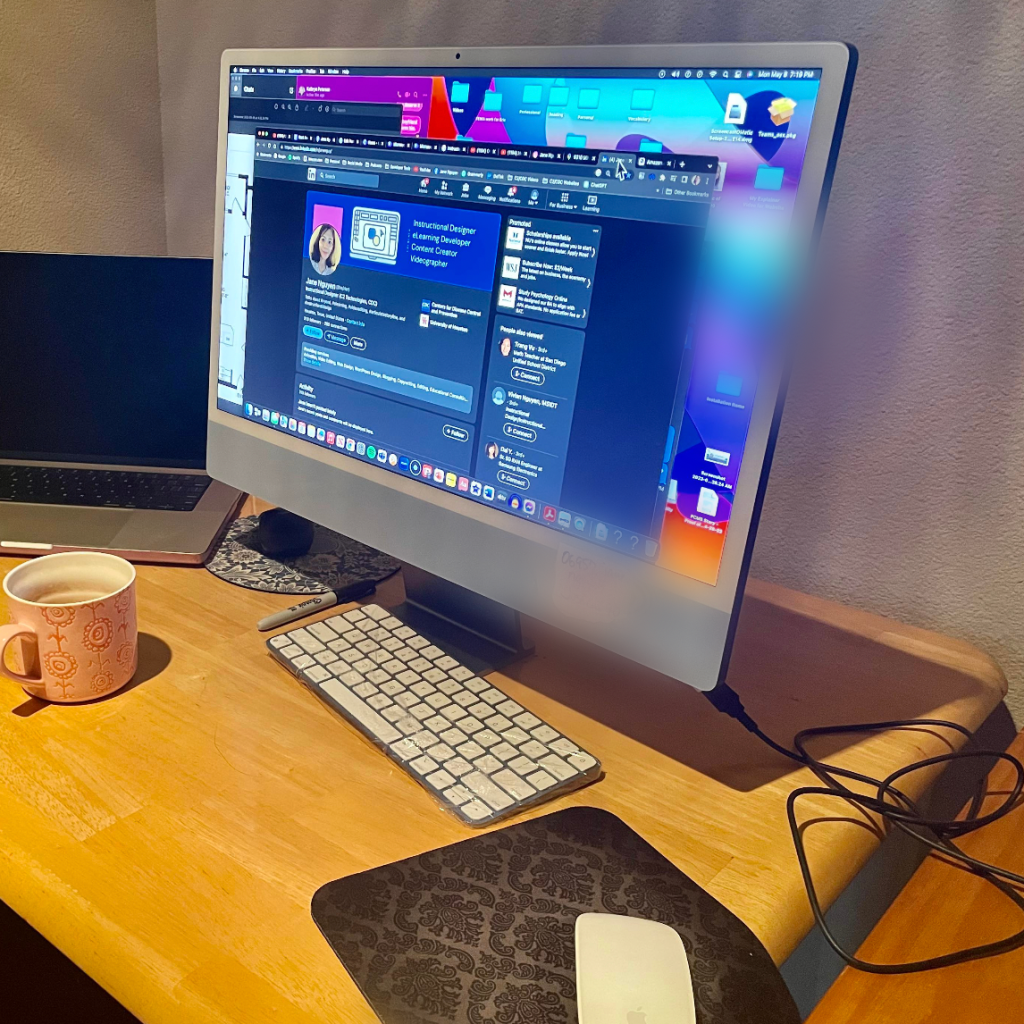
I’m kinda obsessed with WFH (work from home), so I’d like to talk about my journey to fully remote work. I do realize that much is already written about WFH: the benefits to workers, the impact on companies, and the ongoing strife between employers and employees (I like to follow the Apple battles about it). So this won’t be about all the benefits but more about how it came to appeal to me so much.
Driving for Work
From 2008 to 2020, I drove a lot for work. I was an adjunct English instructor and in-home or center-located tutor for many years. In a single day, I went from community college to community college, to people’s homes, and to education centers. It didn’t bother me that much in the early years. Driving for work was the norm, and “work from home” was not nearly the thing it is now; it never crossed my mind that I or anyone else should do it.
Although I didn’t like driving so much and knew I did it more than most others, I managed not to focus on it to the point of vein-popping frustration and resentment. I often rationalized my peripatetic situation as a good tradeoff: yes, I drove a lot, but it was great not being tied to a single building all day, but instead free intermittently to run errands, go through fast-food drive-thrus, complete a bank transaction, do whatever I needed to do amid all that driving.
Between 2016 and 2020, I had either a full-time teaching position or office job, which meant I had only one place to be. Those commutes were not unreasonable (they ranged from 3 to 13 miles one way), but my routes were not via freeway, and city driving means a lot of lights; it still took anywhere from 30 minutes to an hour and a half round-trip. For a lot of people, that is not a big deal at all. But I had become–and still am–very selfish with my time. I want 7 to 8 hours of rejuvenating sleep every night. I’ve also spent much of the last six years continuing formal, degree-seeking education. I work out regularly; I cook my own food most of the time and clean my living space without help. I need every minute I can get to do those things.
The Pandemic

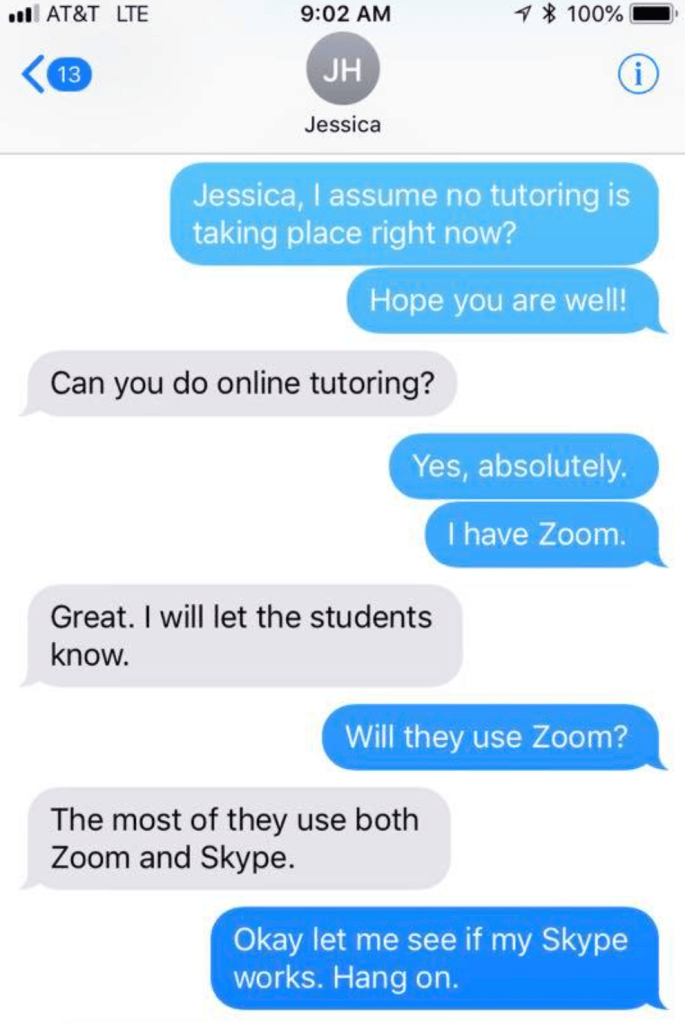

That fateful beginning-of-quarantine weekend in March 2020, I was teaching at a private school on the west side of Houston. This was my shorter commute of 3 miles one-way–30 minutes roundtrip. I appreciated that period when my commute was negligible. But even short commutes are commutes, and getting ready for work every day and lugging my stuff into and out of cars and into and out of buildings was still a hassle, especially when my workday as a teacher was already stressful enough.
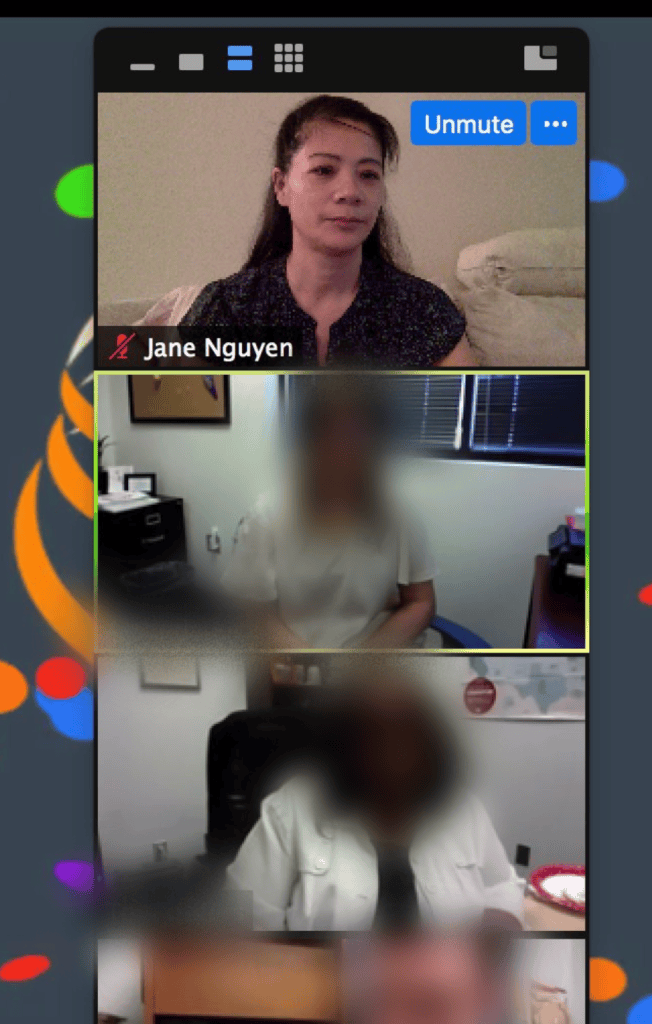
Like most schools, the one for which I was teaching immediately pivoted to Zoom classes. We were on a schedule just like when students had in-person classes. First period at 8 am, second at 8:55 am, third at 9:50 am, etc. Meetings, parent conferences, and professional development sessions were likewise held as usual…via Zoom.
Less Hassle
Zoom teaching on a schedule was my first taste of remote work. I loved that my morning routine went from:
– wake up, 30 to 40 minutes of showering, putting on a small bit of make-up, getting hair presentable, picking out clothes & putting them on, putting some lunch together, etc. and another 30 minutes of getting my stuff together, getting into my car, driving, getting my stuff out of the car, going from the parking lot to the building, walking up the stairs into my classroom…
To:
– wake up, freshen up for 10 minutes (only worrying about my appearance from shoulders, top of the chest, and upward –[note: face/hair prep for video conference is less work than for in-person because people can’t see you as well over video conference]), and then “commute” 10 seconds to my laptop on my coffee table.
WFH Became the Norm
Meanwhile, from social media and the news, I saw that everyone else was also working from home. It was odd, people said, but totally doable, and going into an office had been unnecessary for some time anyway, given their work was primarily emails, the Internet, Google searches, file sharing, collaborative documents, and productivity tools like the Microsoft Office suite and other software & cloud platforms.
I loved working from home. But I didn’t immediately think long-term that I would switch careers to keep doing it. That was the first spring of Covid when nobody knew what school would be like in the fall; I thought it was possible teachers would teach from home indefinitely (Wishful thinking??) Also, even though I’d been burning out from teaching for at least four years before Covid, I wasn’t yet in “career switch” mode, largely because I didn’t have a clear sense of what I would do instead. We were coming up on summer, which I’d have fully off, and I wouldn’t have to teach from anywhere for a time. I pushed the future to the back of my mind.
Fall 2020
In the fall, when we were asked to return to in-person teaching, it hit me how much I did not want to give up the comfort and convenience of working from home. I was also well aware that many other people working in certain job types would continue working from home, and I resented returning to the exhausting grind when they didn’t have to.
This was a turbulent time for teachers. Many resented being asked to teach in person when Covid was still an unpredictable threat. I myself was less worried about Covid – though I definitely did mask up (even double-masked up) – than I was just resentful, on principle, of the forced return and the as-usual disregard for teacher concerns.
Disturbed by some student behaviors that fall, and because I’d wanted to leave classroom teaching anyway, I began job-searching. My goal wasn’t primarily remote work, however; my main objective was a career switch. After poking around and looking–via LinkedIn and other job-search websites–at various suitable positions, I discovered instructional design and realized it was an ideal position for me. I immediately began updating & overhauling my cover letter and resume, watching videos & reading about ID concepts, upskilling on various tech tools & software, enrolling in an instructional design program, and putting together an online portfolio. I applied for positions with doggedness and was successful in getting interviews.
Many instructional design roles are fully remote, but just as many are not. The higher education ones, which were the ones I was targeting because I felt I had a better shot at them with my extensive college teaching history, tended not to be, or to be only hybrid. I knew this but was more determined to transition to instructional design than I was to be fully remote, although WFH was strongly preferred. Fortunately, because we were still pre-vaccine and in the first year of Covid, most higher ed instructional design positions were at least temporarily remote. At the time, because I was so desperate to cease in-person teaching and be relieved of the stress and overwork that comes with it, being temporarily remote–as long as it was an instructional design role–still appealed to me.
Remote / Hybrid
I eventually got offered an instructional design position with a university in my area. It seemed like a solid team and a fortuitous stepping-stone opportunity, but regardless of its merits, it was my only job offer in four months of searching, and I had to take it. With regard to WFH, it was made clear to me that the team was remote only for now, until more unfolded with Covid. I lived a staggering 38 miles from the university at the time, but I told myself that it would be a long time before five days a week of in-person work was required, and by the time it was, I’d live closer (25 miles away instead of 38), though still not close. Plus, there was so much talk about work from home being “here to stay” that I thought companies’ and organizations’ warnings that “this is not a remote job; you will work in person after all this is over” was a bluff. I figured they’d inevitably fall in line with 2021 WFH times; they just didn’t know it yet.
Over the next 22 months of working in higher ed instructional design, I was mostly remote. This included long stretches of going into the office only 0, 1, or 2 days a week, with a 2.5-month period of going in 3 days a week, which I hated. Fortunately, the periods of 2-3 days a week in person aligned with when I had moved closer (25-mile commute one way). That was still very unappealing to me though. The only hybrid work schedule I found acceptable was going to the office one day a week.
Why didn’t I move closer? I didn’t want to. At 25 miles away from the campus, I was as close to work as I was willing & able to get and still stay near my family, friends, and preferred social surroundings.
Why Commuting Bothered Me
In-person work two days a week, which is what the administration set as the norm for my team, at least until further notice, bothered me greatly because of the distance. I knew some people considered 40 to 60% on-site work a reasonable compromise, but I couldn’t shake that while it wasn’t bad, it wasn’t what I wanted, and I should pursue what I wanted instead of tolerating what is “not that bad” or that “could be worse.”

It’s not that I hate driving. I enjoy long interstate drives on road trips when there’s no traffic. Even zipping around one’s city for social events or to run errands can be cool. But long or longish freeway or city-driving commutes for work when you’re in a time crunch or there’s traffic before or after a long workday is a different story. Things that pissed me off about a long freeway commute were 1) occasional debris flying at or near you when you’re driving fast (plastic bags, pieces of cardboard, random anything, or car parts coming off people’s vehicles) 2) a random piece of wood or tire or even mattress actually on the freeway that you have to swerve to miss, 3) car accidents that cause 20 to 45-minute slow-downs, 4) no car accidents but general congestion that causes slow-downs.
It’s also the case that driving with intermittent or steady traffic for long periods of time breaks you down mentally and emotionally. That you can listen to audiobooks and podcasts doesn’t negate that or make it okay. I honestly felt like crying sometimes. I did cry sometimes.
Power Trips
It also bothered me to periodically observe or hear about administrators treating WFH as fodder for threats and power trips. It might not have been said in so many words, but the subtext was that if there was a misstep in any way (actual, perceived, real, or made-up), or if any performance metric was off in a negative way, even if the cause was unknown, flexible work would be taken away. Sometimes there was not a context of penalty, but reminders that we might return to five days a week of in-person work, depending on what the powers that be wanted (which was always shifting and execs were always to varying degrees disgruntled that buildings were not as full as they’d once been) and what the needs of the university were at any given time. While adapting as needed may seem reasonable and responsible, I didn’t get the sense that accommodating employees’ needs was a priority or even much of a factor. It was more along the lines of…you have to do what we need at any given time, regardless of what you may need at that time. There was even a guideline that you had to “apply” for remote work each semester.
I can’t say for sure what the mentality behind all this was, but it felt horrible working in an organizational culture that saw remote workers as “probably slacking off” (this was indeed the derogatory attitude; I heard it firsthand from administrators I was walking behind in a corridor one day, as well as from my supervisor reporting what she heard in executive meetings). Administrators seemed to think that staff were in need of frequent and various reminders that they’re lucky to be working from home and that it can be taken away anytime (so don’t get comfortable). Even though my direct supervisor was amazing and pro-remote work, I hated working for higher-ups who only begrudgingly allowed remote work and wanted employees to ask permission for it every five months (perhaps to reinforce that they were being done a favor and thus needed to be appreciative; at the same time, intentionally or unintentionally creating anxiety in them about whether future attempts at work-life balance would be denied).
Fully Remote Work
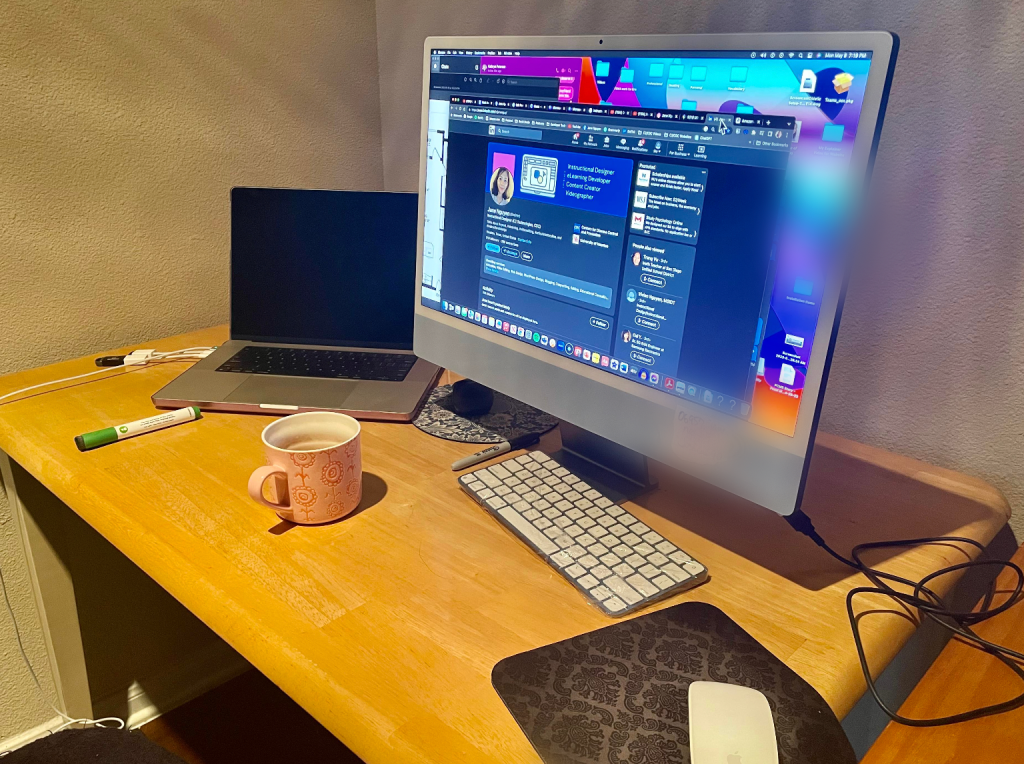
I am now in a fully remote position. My choice to move on from my previous employer was not only about remote work–I had other reasons, such as seeking higher income and a different focus within instructional design. But I only applied for jobs meeting my target pay and desired niche that were fully remote, because I figured…life’s too short to spend 5 hours a week on the freeway, where you might die, or just cry all the time because of traffic, and have people tell you every three weeks that the 5 hours might get upped to 10 or 12 because of the organization’s need for you to be in one of their offices for Zoom meetings instead of in your home for Zoom meetings and to create the optics of “liveliness” and “activity” in buildings. Also as a reminder of who’s in charge. At least that’s the way I saw it.
Don’t get me wrong: I enjoy a degree of camaraderie with colleagues, and I often enjoy work meetings where we talk shop or organize a project and delegate tasks. Some work connection is important. It’s just so much better for my lifestyle, personality, and comfort when I don’t have to commute for work and when I can work autonomously in the comfort of my own home.
Not everyone enjoys working from home or feels most productive this way, but I can safely say that I’m a person who’s more focused when at home. My satisfaction is not just because of the experience of working from home, however; it’s as much because I’ve excised from my week five hours of very irritating and stressful commuting (and that would be 12.5 hours if I’d had to go in five days a week, which is the reality for some people). In recent years, I’ve come to realize that happiness is not an emotional state that we all have to get to but more an amalgamation of time spent: you want to maximize experiences that bring you pleasure, joy, and contentment, and reduce or eliminate experiences that cause you frustration, stress, and grief. That thought is what drove me to not settle for a hybrid position or to rationalize that 2 days a week of commuting is better than 5 days a week of commuting. It is, but you can’t beat 0 days a week of commuting. I call this self-care.
WFH Benefits
I’m ending with a short list of things I’ve loved about working from home. In no particular order and basically what comes to mind right away; there have been many benefits for me not listed here.
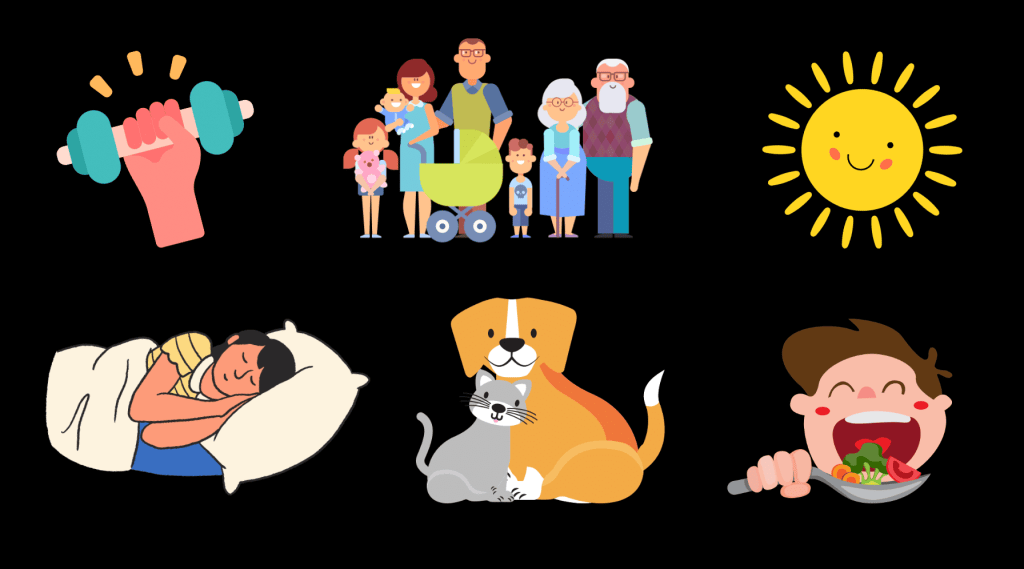
1. Social Life Convenience. Any weekday is fine to do something at 6 or 7 pm, which is when many events start. It used to be that I couldn’t make it at all because of when I would be home, or I could make it but only in a rushing manner. Or I could make it, but I didn’t want to go or was lowkey irritated when I got there because I was zapped from the workday and driving.
2. Lunchtime Flexibility. It’s nice not having to plan and pre-pack lunches to bring to work. From home, I can decide on the fly what I will eat when lunchtime nears. I can also eat what I’m craving in that very timeframe rather than be beholden to what I packed the night before or that morning. Of course, one can decide to eat out in the vicinity of work instead, but if you’re trying to watch your wallet, which I often was, you’re inclined to stick to what you brought.
3. Time with Loved-Ones. I can spend time with my mother while working. Sometimes I work from her place, or she comes to my place. Though I’m in my own space focused on work or in meetings, it’s nice that she’s in the other room and I can talk to her intermittently throughout the day. She’s retired, unpartnered, and needs & wants the company. I used to feel sad when working full-time in person in classrooms or offices that I saw co-workers and random people much more than I saw my own mother.
4. Outside Time. I like sitting on my balcony to work and thus having automatic outside time. In recent years I’ve become more attuned to the importance of seeing grass, trees, the sky, etc. each day and getting a certain amount of natural light (I’ve heard it supports circadian rhythms and a natural sleep schedule, among other benefits). I’m generally an indoor person, but outside is getting more and more of my time these days because I’ve noticed mood boosting. It’s easier to get occasional outside time from home, while not skipping a beat with your workload, than it is when you’re in an office.
5. Time at Home. I get to spend a lot more time in my apartment, where I’m most comfortable and relaxed. Not to mention, with rents being as high as they have gotten, it’s weird to pay 1/3 or more of your income toward a place where all you do is have a quick meal while watching a t.v. show and then sleep, since you spend most of your waking hours in an office. I pay a lot of money to live in my apartment; I want to enjoy it it. Working from home, I get to do just that.
As has been said for a long time now, the pandemic changed everyone. I was part of a larger phenomenon of Americans re-thinking how and with whom they spend their time. People decided that life’s too short to live in frustrating and unfulfilling ways. I think it’s great that everyone realized how much they valued being with their loved ones, having time to sleep & exercise, and working to live instead of living to work.


 English 1301: Compare/Contrast Essay
Leave a comment